Europe is a continent that has seen many misfortunes in its existence. War, slavery, famine, forced division of communities. And while it’s important to remember that many European countries caused even more misery abroad with its (neo)colonialism, woes at home have made us stronger and united in diversity.
My entire existence falls within the European post-1989 period, the prematurely declared end of history. I grew up watching music videos on American MTV and spending free time online browsing American MSN and AOL services. Uncle Sam’s soft power was felt very strongly anywhere in Estonia, especially given the Tiger Leap‘s bet on American tech.
Households in the former Eastern bloc would prefer the US Dollar over the Euro for some time before joining the European Union as the hard currency in case of emergency, given the US’ status as the world’s only military and financial superpower at the turn of the century. Hollywood movies would earn higher box offices over local competition across the entire continent.
Thanks to the omnipresence of the US in popular culture I’d be speaking English by the age of 10, that despite having no relatives with the knowledge to match at the time. My entire childhood was dominated by the American soft power, yet that is only half of the story.
Considering the fact that I myself am a byproduct of colonisation (parents’ ancestors came to Estonia from other parts of the Soviet Union during the occupation), my upbringing was split between several cultural influences.
Russian colonial chauvinism, disregarding Estonia’s right to sovereignty (“why should I learn Estonian when this land belonged to us for 200 years” is something I’d hear growing up); the reality of living in Estonia clearly proving otherwise; American popular culture surrounding every aspect of life – from Marvel comic books to Coca-Cola Christmas ads.
Despite all these cultural struggles playing out past the end of the Cold War, they were surrounded by a new emerging identity, which has arguably been developing since the end of WW2 but only reached my country once it regained independence – that is, being a European first and whatever your nationality is secondary.
Given my mess of an ethnic background, being European was always the most appealing identity to relate to – and it wasn’t just a projection either.
While growing up on American cartoons, I’d watch both Губка Боб Квадратные Штаны on Russian Nickelodeon, as well as Spongebob Schwammkopf on German Toggo. My MP3 player would have Michael Jackson’s songs, yet I’d also listen to Stromae, Inna, Tokio Hotel, as besides MTV there would be European TV channels like MCM and VIVA.
Not to mention the 90s genre of Eurodance that my parents’ generation used to go clubbing to and I’d still listen to today from time to time. I highly doubt many people outside of Europe know who 2 Unlimited and Dr Alban are. There has been a bit of a renaissance of the genre on TikTok and Instagram, but that’s a more recent story.
And how could I forget about Europeans tuning in once a year in May for the Eurovision finals? I’d argue that no music contest in the world is as political as this one, despite the EBU (fuck the EBU by the way) always trying to downplay that.
Centuries of conquest, as well as cultural domination of great powers over their vassals left their mark on pretty much every people in Europe. I find the nationalists’ claim for their cultural purity especially ridiculous due to this simple fact. Those same nationalists and other supremacists would then try to find some blood connection to superior races in clear contradiction.
But then again, it’s a waste of time to look for reason in someone’s insecurities. The best antidote for that will always be good education that broadens horizons, an inclusive job market and accessible social security – yet again just a few aspects of the European way of life.
The quality of the welfare state varies by country, yet it’s hard to deny the demand most Europeans have for social security frameworks to stay in place. The French sure are never happy with anything, but they definitely cooked with protecting their pension system. Maybe we should all be a little more like the French (but keep our finances in check).
I speak 4 languages, all of them being European – having studied them to some extent back in middle school as part of the curriculum. During my teenage years I’ve been fortunate to go on several road trips across Europe, and have taken part in EU-sponsored exchange programs in Berlin and Strasbourg – all before turning 18.
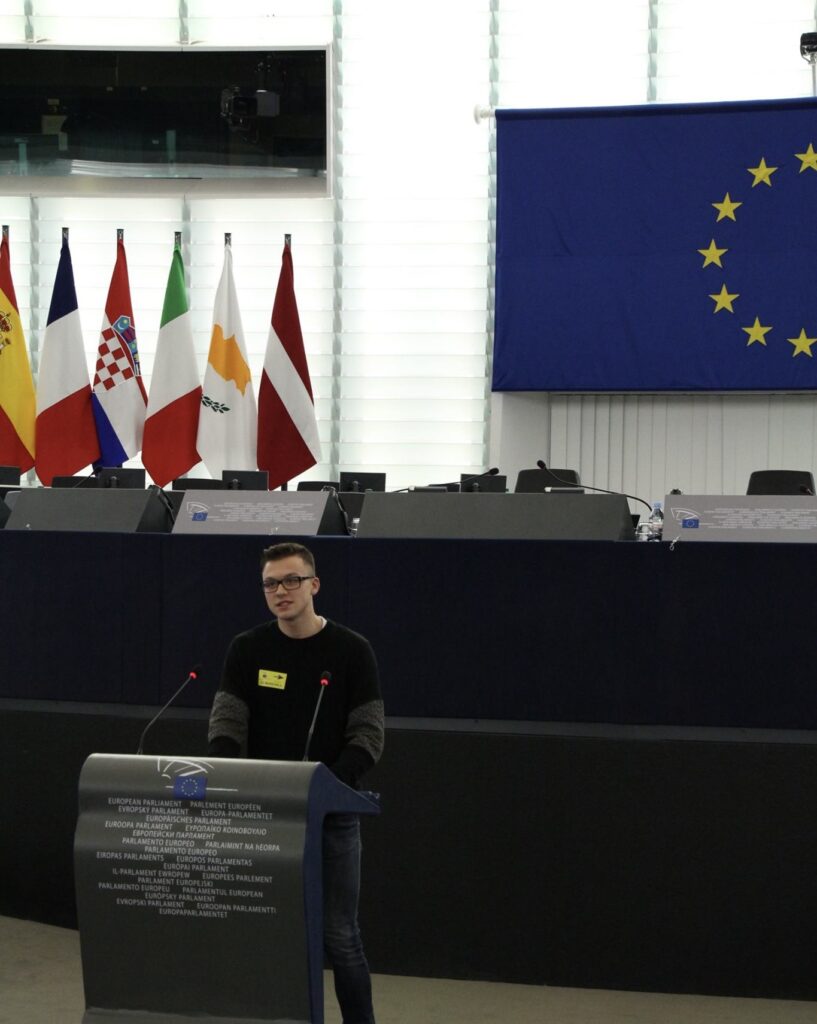
Thanks to said exchanges I was able to make friends across Europe, with more people coming into my life as I travelled across the continent more often or talked to the tourists visiting Tallinn.
Today, university students and young people can benefit from Erasmus+ programs and study abroad – often at no extra charge, while 18-year-olds are eligible for train tickets to explore Europe for free with DiscoverEU. It’s not a secret to anyone that these two initiatives brought many Europeans closer together, helping even create new families across borders.
Estonia joining the European Union in 2004 brought a good deal of prosperity to my family, opening up the country to even more trade with our much wealthier neighbour Finland. It also became easier to go to Latvia down south – although very young at the time, I still remember the annoying border checks that preceded joining the Schengen area.
I’d visit the two countries way more often than either US or Russia, not to mention how difficult and expensive it is to this day for an average Estonian to visit the former. My knowledge of streets in Riga and Helsinki is much better than those of Moscow or New York. Confident about the same for most Estonians – so why are many of us so obsessed with either country?
Is the massive hard/soft power of either former Cold War adversary so overwhelming that it makes small European countries oblivious of their own agency within the immediate neighbourhood?
Why blindly follow potentially hostile powers when you can cooperate with someone who (mostly) listens? Otherwise you only get protection while being complicit on things that aren’t even related to your region’s interests.
How is this independence?
While living in Estonia – and to this day – I’d often come across opinions from locals that “small countries don’t get to make any decisions” or that “we have to fall in line to be protected”. These people clearly never learned from Finland in 1939 – the League of Nations never came to save it from the Soviet Union, they had to fight back themselves to keep their sovereignty.
This applies to any small nation within the sphere of influence of a great power, so why align yourself with any of those when you have nations in a similar situation right next to you? In fact, if all small/ medium powers in the vicinity pool resources together you may match or even exceed the might of those who try to enslave you.
That was literally the point of creating the European Union, albeit with a more herbivore approach to maintaining peace. With today’s reality in the surrounding world, being a pacifist is sadly no longer an option. Clearly we need to start flexing the hard power muscle as well, now that there’s no one left to protect us. A proposed EU army could be one such solution.
Perhaps it would be an understatement that I’m happy many of my fellow Europeans are finally seeing what I’ve been preaching for years – imperialist powers west and east of Europe are not our friends. Each power has its own interests, clearly incompatible with ours. The common man in Europe seeks peace and collaboration, not forced expansion.
We’ve been too reliant on great powers for tech, defense or energy. And all that despite the population count of the EU28 matching that of both the US and Russia combined. Are we not smart enough to create our own solutions and make our own decisions?
It’s important to acknowledge that some degree of sovereignty will be lost with closer integration – for example by replacing unanimous voting with a qualified majority on the EU level. Yet I know which choice most people would go for if they had to pick between having less sovereignty and none at all. That is the choice Europe is facing today.
I’m optimistic that people will make the right choice, with our rich class who have a lot to lose if Europe perishes supporting us along the way. We can’t let a bunch of billionaires divide and rule us like they do in the US or Russia.
Standing up on our own, free from hostile foreign interference, is in everyone’s interest. And we still get to diversify our relationships outside of Europe without having to fall in line.
Concessions on national interests will have to be made, but we cannot ignore the fact that we’re bound by geography. Many decisions will hurt some more than others, yet you can’t please everyone within such a diverse community. Taking action over staying idle while everyone else runs circles around you will always be the lesser evil.
I’m not ignorant to the geopolitical realities of the previous decade – decoupling from the US then wouldn’t have been a wise choice given the threat wasn’t yet as apparent to be of major concern. But it is now, and we have the identity that unites us better than most Hollywood movies we couldn’t relate to in daily life anyway. Time for a divorce from Uncle Sam.
It starts with small things. Drop Google in favour of Proton. Have your coffee at a local chain instead of Starbucks. And if you’re trading on the stock market, run away from Interactive Brokers as fast as you can. Your money might literally be held hostage at some point, so better diversify and invest in your future at home instead. Rules don’t matter across the pond anymore.
(also follow @jevgeni on monnett – the app itself isn’t quite functional yet but it does have the potential)
Venezuela, Greenland and Minneapolis have to be the final wake-up call for us. Need I remind that all of this happened within January and we’re not even done with this month yet? If the people in that country can’t help themselves against this tyranny, how can we allow ourselves to rely on them? We might be the ones who’ll have to start helping them soon.
While the most powerful country in the world is tearing itself apart because instead of cheaper eggs its voters got themselves a new Gestapo, the people in Europe have the advantage of engaging with other cultures from an early age as equals. This experience makes us more considerate in our decisions and more tolerant toward all things foreign.
There will always be outliers, and they will need to be convinced as well that the reason of their misfortunes is not their immigrant neighbour, but often the neighbour’s employer – to whom it’s less costly to exploit a newcomer with only a fraction of the rights and wealth that a local is entitled to. The policies encouraging this kind of discrimination have to be abolished.
In the process of decoupling, Europe will need more foreign talent – not less. That will include people from cultures foreign to an average European, but also those who are fleeing American brutality. We in Europe don’t know everything, but we can and must welcome those who want to bring us the knowledge we’re missing.
Countless revolutions and power struggles have brought upon an ever closer European Union – led with solidarity, not force. As long as we look out for each other and respect our differences, Europe will prosper. Most Americans will probably not grasp this concept before it’s too late. Let’s show them what the American dream should look like – here in Europe.